Transitions are called "the fourth discipline" in triathlon for a reason. A sloppy transition can cost you 5+ minutes. A smooth one can leapfrog you past dozens of competitors. This checklist ensures you don't forget a single thing — and that you know exactly where everything is when the clock is ticking.
Before Race Day
- Practice transitions at home — lay everything out and rehearse T1 and T2 at least 3 times
- Know the transition layout — study the event map (swim in → bike out → bike in → run out)
- Check if the race uses one or two transition zones
- Confirm your bike is race-ready — tires inflated, chain lubed, brakes tested, bike fit
- Charge your GPS watch — set up multisport mode if available
- Write your race number on your arm/leg if body marking is allowed pre-race
Complete Triathlon Gear List
🏊 Swim Leg
- Wetsuit (if water temp permits) — practice putting on and removing quickly
- Tri suit / tri shorts + top — worn under the wetsuit for the entire race
- Goggles (2 pairs — one tinted, one clear, in case conditions change)
- Swim cap (usually provided by race)
- Body Glide / anti-chafe — neck, wrists, ankles for wetsuit removal
- Earplugs (optional, for cold water)
🚴 Bike Leg
- Bike — racked in your assigned spot
- Helmet — must be fastened before touching bike (DQ if not)
- Cycling shoes (or run in tri shoes for sprint distance)
- Sunglasses
- Bike nutrition — mounted to frame (gels, bars, bottle with electrolytes)
- Flat repair kit — spare tube, CO2 inflator, tire lever
- Bike computer / GPS (optional)
🏃 Run Leg
- Running shoes — with elastic laces (saves 30+ seconds)
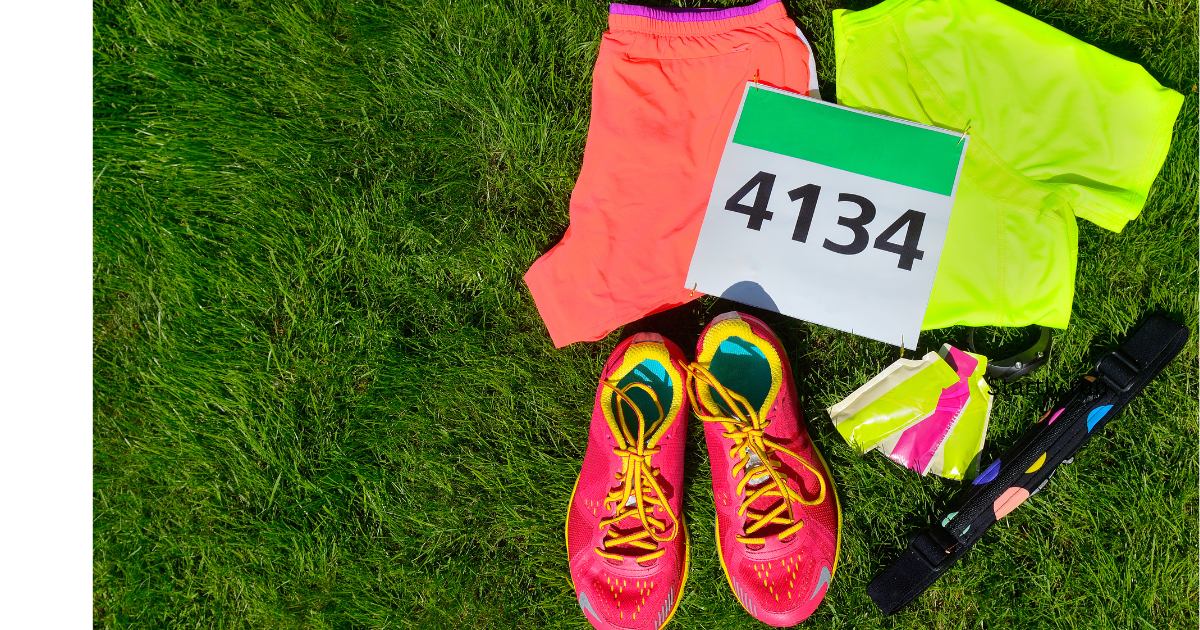
- Race belt with bib number — clip on, don't safety-pin
- Hat or visor
- Run nutrition — gels in race belt if needed
- Socks (optional for sprint — required for comfort in Olympic+)
T1: Swim → Bike Setup
- Run to your spot — count racks and use landmarks, not just memory
- Strip wetsuit — pull to waist during the run, then yank from ankles
- Helmet ON and buckled — before you touch the bike
- Sunglasses on
- Cycling shoes on (or pre-clipped to pedals for flying mount)
- Grab bike by seat — run to mount line
- Mount bike past the mount line
Pro tip: Place your helmet upside down on your handlebars with sunglasses inside. That way the order is automatic: open helmet → grab sunglasses → put on glasses → put on helmet → buckle.
T2: Bike → Run Setup
- Dismount before the dismount line
- Run bike to your rack spot
- Rack bike — helmet stays ON until bike is racked
- Remove helmet
- Swap to running shoes (elastic laces = no tying)
- Clip on race belt with bib
- Grab hat/visor and run nutrition
- Go!
Transition Time-Savers
- Elastic laces on running shoes — saves 30-60 seconds of tying
- Pre-clip cycling shoes to pedals — flying mount saves time (practice first!)
- Use a bright towel — you can spot your spot from 10 racks away
- Keep it minimal — every extra item costs seconds of decision-making
- Rehearse, rehearse, rehearse — muscle memory beats thinking under race adrenaline
- Body Glide everything — ankles, neck, and inner thighs prevent painful surprises
Track your triathlon with smart checklists
Startly builds personalized race-day checklists, countdowns, and reminders — for every race you enter.
Try Startly FreeFrequently Asked Questions
What is T1 and T2 in triathlon?
T1 (Transition 1) is the swim-to-bike transition where you remove your wetsuit, put on cycling gear, and head out on the bike. T2 (Transition 2) is the bike-to-run transition where you rack your bike, swap cycling shoes for running shoes, and start the run leg.
How should I set up my transition area?
Lay a small towel next to your bike rack. Place T1 gear (helmet, sunglasses, bike shoes, nutrition) on the left side and T2 gear (running shoes, hat, race belt) on the right. Keep it compact and organized so you can find everything by feel, even when flustered.
How long should triathlon transitions take?
For beginners, T1 typically takes 3-5 minutes and T2 takes 2-3 minutes. Experienced triathletes aim for under 2 minutes for T1 and under 1 minute for T2. Practice makes the biggest difference — rehearse your transitions at home before race day.
Smooth transitions win races. Practice once, race fast. 🏊🚴🏃